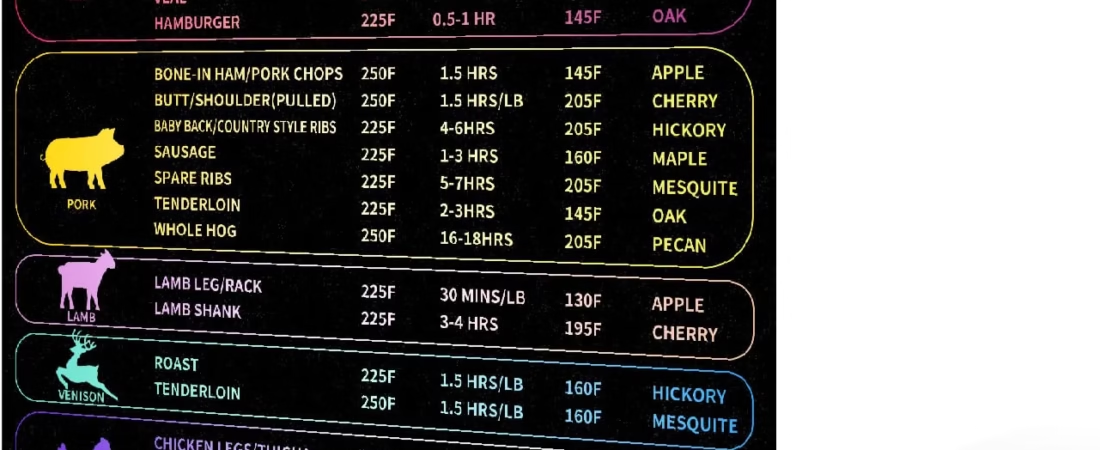
Smoking meat is one of those cooking methods where preparation, patience, and consistency can make a significant difference. Unlike quick grilling over direct heat, smoking generally involves cooking food at a controlled temperature while exposing it to smoke from wood. The process can take several hours, and the results depend on factors such as the type of meat, its thickness, the cooking temperature, the type of wood being used, and the smoker itself.
For anyone learning how to smoke meat, remembering all of these variables can be challenging. A simple reference guide can make the process easier by putting commonly needed information in one convenient location.
The Meat Smoker Guide described here is a premium smoker accessory designed as a quick-reference resource for grilling and smoking. It provides information related to wood types and cooking times and is presented as a waterproof magnetic sheet. Its format is intended to make frequently used smoking information easy to consult while preparing food.
Rather than treating a reference sheet as a substitute for cooking knowledge, it is more useful to think of it as a reminder tool. It can help cooks quickly recall general information while still encouraging them to use reliable food-safety practices, a thermometer, and the specific instructions associated with their smoker.
This guide explores what a meat smoker reference sheet is, how such a tool can fit into a grilling routine, what information is useful when smoking meat, and what to consider when choosing a reference accessory for a smoker or grill.
What Is a Meat Smoker Guide?
A meat smoker guide is a reference resource that organizes common information used during barbecue and smoking.
Smoking meat involves numerous decisions. A cook may need to choose a suitable wood, determine an appropriate cooking temperature, estimate how long the meat may take, and monitor the internal temperature throughout the process.
Beginners often have to look up these details repeatedly. Even experienced cooks may appreciate having frequently used information available without opening a cookbook or searching online.
A dedicated reference sheet addresses this simple problem.
The product discussed in this article combines smoker-related information with a magnetic format. The guide includes information about wood types and cook times, allowing it to function as a quick reference while preparing smoked foods.
Because it is described as waterproof and magnetic, the sheet is intended for an environment where splashes, steam, grease, and changing cooking conditions are common considerations.
It is important to understand that smoking guides generally provide starting points rather than guaranteed cooking schedules. Meat does not always cook at exactly the same rate, so time estimates should be combined with temperature monitoring and practical judgment.
Key Features
Several characteristics make a smoker reference guide useful in a grilling environment.
Wood Type Reference
Wood selection is an important part of smoking because different varieties can contribute different smoke characteristics.
Common smoking woods include:
- Apple
- Cherry
- Hickory
- Maple
- Oak
- Pecan
- Mesquite
Each type has its own characteristics, and the intensity of smoke can vary depending on the smoker, fuel arrangement, cooking temperature, and amount of wood used.
A reference guide that organizes wood information can help cooks remember which varieties are generally associated with different foods or flavor profiles.
For someone who is still learning the differences between smoking woods, having a visual reminder nearby can make experimentation more organized.
Cooking-Time Reference
Smoking can involve long cooking periods, so time estimates are often useful when planning a meal.
A reference sheet can provide general cook-time guidance for different types of meat.
However, cooking time should never be treated as the only indicator of doneness. The thickness of the meat, starting temperature, smoker temperature, weather conditions, airflow, and other variables can all affect the actual cooking process.
For that reason, time references are best used for planning and monitoring rather than as an exact rule.
Waterproof Format
A cooking reference used near a grill or smoker is exposed to an environment where moisture is common.
Steam, rain, splashes, condensation, and accidental spills can all affect paper materials.
A waterproof design can make a reference sheet more practical for outdoor cooking conditions.
Even with a waterproof surface, proper placement remains important. Keeping the guide away from direct flames and excessive heat helps preserve it and prevents it from becoming an obstruction around the cooking equipment.
Magnetic Backing
The magnetic format allows the guide to be positioned on compatible metal surfaces.
For example, it may be convenient on the exterior of a suitable smoker, grill cabinet, refrigerator, or other metal surface located near the cooking area.
A magnetic reference can be easier to access than a loose sheet of paper that needs to be carried back and forth.
The actual strength and suitability of the magnetic backing depend on the surface and conditions where it is used.
Quick-Reference Design
A quick-reference guide is designed around convenience.
Instead of searching through multiple pages of information, the cook can glance at a single reference point for commonly used smoking information.
This can be particularly useful during a busy cooking session when attention is divided between temperature monitoring, food preparation, timing, and other tasks.
Why Wood Choice Matters When Smoking Meat
Wood is one of the defining elements of traditional smoking.
When wood burns or smolders under appropriate conditions, it produces smoke containing compounds that interact with food. The type of wood influences the character of that smoke.
Different woods are commonly associated with different levels of intensity.
Apple Wood
Apple is often associated with a relatively mild and fruity smoke character.
It can be considered for poultry, pork, and other foods where a lighter smoke profile may be desirable.
Cherry Wood
Cherry is commonly used with pork and poultry and is known for its fruit-oriented smoke characteristics.
It is also sometimes combined with other woods.
Hickory
Hickory is a familiar choice in barbecue and is associated with a stronger, savory smoke character.
It is commonly used with pork and larger cuts of meat.
Oak
Oak provides a versatile smoke profile and is often used with beef and other meats.
Because it can provide substantial smoke without necessarily being as intense as some stronger woods, it is frequently used as an all-purpose smoking wood.
Mesquite
Mesquite is generally associated with a strong smoke character.
Because its smoke can be quite pronounced, cooks often use it thoughtfully, especially with longer cooking sessions.
Pecan
Pecan is related to the hickory family and is often described as providing a somewhat milder smoke character than traditional hickory.
It can be used with various meats depending on the desired flavor.
These descriptions are general. Smoking results can vary significantly based on the amount of wood, the smoker’s design, airflow, cooking temperature, and duration.
Understanding Smoking Time
One of the most common questions among new smokers is, “How long should this meat cook?”
The honest answer is that there is no single cooking time that works for every piece of meat.
A reference chart can provide an estimated range, but several factors influence the actual cooking process.
Thickness
Thickness often matters more than simple weight.
A thick roast may take considerably longer to reach the desired internal temperature than a thinner piece with the same overall weight.
Cooking Temperature
The temperature inside the smoker directly influences the rate at which food cooks.
A lower cooking temperature generally requires more time, while a higher temperature can reduce cooking time.
Maintaining a relatively consistent cooking environment is therefore an important part of smoking.
Starting Temperature
Meat placed into a smoker directly from a refrigerator is starting at a different temperature than meat that has been sitting out briefly under appropriate food-safety conditions.
This difference can affect the amount of time required to reach the target internal temperature.
Weather
Outdoor smokers are influenced by their surroundings.
Cold weather, wind, rain, and other environmental conditions can affect temperature stability and fuel consumption.
This is another reason estimated cooking times should not be treated as guarantees.
Smoker Design
Different smokers behave differently.
Offset smokers, pellet smokers, electric smokers, charcoal smokers, and other designs can produce different cooking environments.
Even two smokers set to the same nominal temperature may require different approaches to maintaining that temperature.
Why Internal Temperature Matters
A smoker guide can help with planning, but a reliable food thermometer remains an important tool for determining whether meat has reached an appropriate internal temperature.
Cooking time is an estimate.
Internal temperature provides a more direct measurement of the food itself.
For example, two pieces of meat may be similar in weight but have different shapes and thicknesses. Their cooking times can therefore differ even when the smoker is operating at the same temperature.
Using a thermometer alongside a reference guide creates a more reliable workflow:
- Select the meat and smoking method.
- Choose an appropriate smoker temperature.
- Select a suitable wood.
- Use the guide to estimate a general cooking window.
- Monitor the smoker temperature.
- Check the meat’s internal temperature.
- Continue cooking as appropriate.
- Follow applicable food-safety guidance before serving.
This approach makes the reference chart a supporting tool rather than the sole source of cooking decisions.
How It Can Be Used
The magnetic smoker guide can fit into several different grilling routines.
During Meal Planning
Before starting a smoking session, the guide can help with choosing a wood type and estimating how long the cooking process may take.
This can be useful when planning meals around a specific serving time.
For long cooks, even a rough estimate can help determine when preparation should begin.
During Smoker Setup
When preparing the smoker, the guide can serve as a quick reminder of the wood characteristics associated with different meats.
This can reduce the need to repeatedly search for information online.
During Cooking
Once the smoking session begins, the guide can remain positioned nearby on a compatible metal surface.
The cook can refer to it when checking general cooking-time information or wood references.
This is particularly convenient during long sessions where the smoker may be monitored periodically.
When Learning to Smoke
Beginners often encounter a large amount of new terminology and information.
Instead of trying to memorize everything immediately, a quick-reference guide can provide an accessible starting point.
Over time, cooks can develop their own preferences while continuing to use the reference sheet as a reminder.
For Experimentation
Smoking is often an iterative process.
A cook may try apple wood one weekend and oak the next. They may also change the smoker temperature or experiment with different cuts of meat.
A reference guide can support this process by making basic information readily available.
For more serious experimentation, cooks can supplement the guide with their own notes about smoker temperature, cooking duration, internal temperature, wood quantity, and final results.
Creating a More Organized Smoking Routine
Good barbecue often involves more than simply placing meat in a smoker.
Preparation can make the process easier to manage.
A simple smoking routine might begin with deciding what meat will be prepared and how many people need to be served.
Next, the cook can select a cooking method and approximate smoker temperature. The wood type can then be chosen based on the desired smoke profile.
The guide can help with these initial decisions.
After the smoker is prepared, temperature monitoring becomes the priority.
During the cook, the reference sheet can provide reminders, but the cook should continue to monitor the actual conditions inside the smoker and the internal temperature of the food.
Once the meat is finished, appropriate resting and serving procedures can follow depending on the specific food.
This separation between planning information and actual cooking measurements is important.
Who It May Be Suitable For
A smoker reference guide can be useful for several types of cooks.
Beginners
Someone learning how to smoke meat may not yet know which woods are commonly paired with different foods or how long different cuts generally take.
A reference sheet can reduce the amount of information that needs to be memorized.
Occasional Grillers
Not everyone smokes meat every weekend.
For someone who uses a smoker occasionally, keeping a reference guide nearby can make it easier to refresh basic information before starting another session.
Backyard Barbecue Enthusiasts
People who regularly cook outdoors may appreciate having frequently used information visible near the smoker.
The magnetic design can be particularly convenient when the cooking area includes compatible metal surfaces.
Hosts and Outdoor Cooks
When preparing food for gatherings, organization becomes especially important.
A quick-reference guide can help with planning cooking windows and selecting smoking woods while the cook focuses on the larger meal.
Gift Shoppers
Smoking accessories are commonly associated with outdoor cooking hobbies.
A compact reference guide can therefore serve as a practical accessory for someone who enjoys grilling and smoking, particularly when paired with other appropriate cooking tools.
Important Things to Consider
A smoker guide is a useful reference, but there are several limitations worth understanding.
Cooking Times Are Estimates
No printed chart can account for every variable involved in outdoor cooking.
The same cut of meat can require different cooking times under different conditions.
Treating a time estimate as an absolute rule can result in undercooked or overcooked food.
Use a Food Thermometer
A thermometer provides direct information about internal temperature.
For food safety, cooks should follow current guidance from reputable food-safety authorities and use appropriate temperature targets for the specific food being prepared.
Consider Your Smoker Type
A chart designed for general smoking may not account for the behavior of a specific smoker.
Pellet smokers, charcoal smokers, electric units, and offset smokers can operate differently.
Use the reference information as a general starting point and adapt based on the equipment being used.
Protect the Guide From Direct Heat
Although the guide is intended for a cooking environment and is described as waterproof, it should not be positioned where it could come into direct contact with flames or excessive heat.
A nearby cool metal surface is generally more appropriate than a hot smoker component.
Check the Magnetic Surface
The magnetic format is useful only where the backing can adhere properly.
Nonmagnetic surfaces, certain stainless-steel finishes, painted materials, and other surfaces may not provide the same level of magnetic attachment.
Keep Food-Safety Practices Separate
A cooking reference guide does not replace proper food handling.
Raw meat should be handled carefully, surfaces should be cleaned appropriately, and cooked food should be protected from cross-contamination.
The guide supports cooking decisions but does not function as a food-safety system.
Comparing General Categories of Smoking References
Different reference formats can serve similar purposes.
Magnetic Smoker Guide
A magnetic sheet provides quick access to information in the cooking area.
Its main advantage is visibility and convenience. It does not require a phone, notebook, or separate cookbook.
Its limitation is that the information is fixed. If the guide does not cover a particular ingredient or technique, additional resources may still be necessary.
Printed Cookbook
A barbecue cookbook can provide much more detailed information, including recipes, preparation techniques, seasoning methods, sauces, and explanations of different smoking methods.
The tradeoff is convenience. Finding one specific piece of information may take longer than glancing at a reference sheet.
A cookbook can therefore complement a quick-reference guide rather than compete directly with it.
Smartphone Reference
A smartphone provides access to a large amount of information.
Users can search for specific cuts of meat, cooking methods, wood combinations, and food-safety recommendations.
However, outdoor cooking conditions are not always ideal for electronic devices. Grease, moisture, heat, and the need to repeatedly unlock a phone can make a physical reference more convenient for basic information.
Personal Smoking Log
Experienced cooks may prefer maintaining their own notes.
A smoking log can record the exact smoker temperature, meat weight, wood used, cooking duration, internal temperature, weather, and other details.
This can become highly personalized over time.
The disadvantage is that it takes effort to maintain and does not automatically provide general reference information for unfamiliar cuts or techniques.
Tips for Getting More Value From a Smoker Reference Guide
A few habits can make a reference sheet more useful.
Use It as a Starting Point
Begin with the information on the guide, then adjust according to the actual conditions of the cook.
This avoids the common mistake of assuming that a single number applies to every smoking session.
Combine It With a Thermometer
The guide can provide estimated cooking times while the thermometer provides actual internal temperature information.
Together, they provide more useful information than either one alone.
Keep Notes
If a particular combination of wood, temperature, and cooking duration works well for your preferred style, write it down separately.
Over time, these notes can become a personalized barbecue reference.
Consider Smoke Intensity
More smoke does not automatically mean better results.
The appropriate amount and type of smoke depend on the food, cooking method, wood, and personal preference.
A reference guide can introduce different wood choices, but experimentation should remain controlled.
Avoid Constantly Opening the Smoker
Every time a smoker is opened, heat can escape.
Frequent opening can make temperature management more difficult and may extend cooking time.
Use external temperature monitoring where possible and open the smoker when there is a practical reason to do so.
Common Meats and Smoking Considerations
Different meats behave differently during smoking.
Beef
Large beef cuts can require extended cooking times.
The choice of wood often depends on the intensity of smoke desired. Oak and hickory are commonly associated with beef, while other woods can also be used.
The shape and thickness of the cut can have a major impact on cooking time.
Pork
Pork is strongly associated with traditional barbecue.
Cuts such as pork shoulder can require long cooking periods, making time planning particularly useful.
Fruit woods and stronger woods can both be incorporated depending on the desired smoke profile.
Chicken
Chicken generally requires careful attention to internal temperature and skin texture.
Lighter woods are often considered suitable for poultry, although many options are possible.
Because poultry can cook differently from large barbecue cuts, cooks should avoid applying one general smoking schedule to every type of meat.
Turkey
Turkey can benefit from thoughtful smoke selection, but its size and shape can make cooking time difficult to predict precisely.
Internal temperature monitoring is particularly important.
Sausages
Sausages may require less time than large cuts, but their size, type, and preparation method affect the cooking process.
A quick-reference chart can help provide a starting point while the actual cooking temperature is monitored.
Why a Physical Reference Can Still Be Useful
Digital information is widely available, but physical reference tools continue to have a place in the kitchen and outdoor cooking area.
A physical guide does not depend on a battery, internet connection, app, or screen.
It can remain visible while the cook moves between food preparation and smoker monitoring.
This simplicity is especially relevant for information that is consulted repeatedly.
Rather than searching the same basic question several times, a cook can glance at a reference sheet and return attention to the smoker.
The magnetic format also means the guide can have a designated location instead of becoming another loose item among grilling tools.
Frequently Asked Questions
What is a meat smoker guide?
A meat smoker guide is a quick-reference resource containing information useful for smoking and grilling, such as wood types and general cooking-time guidance.
What information does this smoker guide provide?
The product is described as providing information about wood types and cook times for smoking and grilling meat.
Is the guide magnetic?
Yes. It is described as a magnetic sheet, allowing it to be placed on suitable metal surfaces.
Is the smoker guide waterproof?
The product is described as waterproof, which is useful in environments where moisture and splashes may occur.
Can it be used outdoors?
It is designed as a reference accessory for grilling and smoking, making it suitable for use around an outdoor cooking setup. It should still be protected from direct flames and excessive heat.
Can the guide tell me exactly how long to cook meat?
No reference chart can reliably predict the exact cooking time for every piece of meat. Cooking times should be treated as general estimates and combined with temperature monitoring.
Should I use a meat thermometer as well?
Yes. A thermometer provides information about the actual internal temperature of the food and is an important complement to general time estimates.
What smoking woods are commonly used?
Common examples include apple, cherry, hickory, oak, pecan, maple, and mesquite. Each has different characteristics, and the appropriate choice depends on the food and desired smoke profile.
Is hickory suitable for beef?
Hickory is commonly used with a variety of meats, including beef. The choice ultimately depends on the desired smoke intensity and personal preference.
Is apple wood suitable for poultry?
Apple is commonly associated with poultry and pork because of its relatively mild, fruit-oriented smoke character.
Can the guide help beginners?
Yes. A quick-reference sheet can help beginners become familiar with common wood choices and general cooking-time information without requiring them to memorize everything.
Can experienced smokers use a reference guide?
Yes. Even experienced cooks may use quick-reference information when preparing unfamiliar cuts or experimenting with different woods.
Can it replace a barbecue cookbook?
Not necessarily. A quick-reference sheet is designed for convenient access to basic information, while a cookbook can provide much more extensive recipes and cooking techniques.
Can it replace online cooking resources?
It provides a convenient physical reference, but online resources can offer more detailed and frequently updated information. The two formats can complement each other.
Where can a magnetic smoker guide be placed?
It can be placed on a suitable magnetic metal surface near the cooking area. It should not be positioned directly against hot components or exposed to flames.
Does waterproof mean the guide can be submerged?
Not necessarily. A product described as waterproof should still be used according to its intended conditions and care instructions. Waterproof construction does not mean it should be deliberately submerged.
Why are smoking times different for different cuts?
Cooking time can change because of differences in thickness, weight, shape, starting temperature, smoker temperature, airflow, weather, and the characteristics of the smoker itself.
Why shouldn’t cooking time be the only measure of doneness?
Time is an estimate. Internal temperature provides direct information about the food and is therefore a more reliable way to assess cooking progress.
Can the guide be useful for meal planning?
Yes. General cooking-time information can help cooks estimate when to start a smoking session, especially for foods that require several hours.
Is a smoker guide a useful grilling accessory?
It can be a practical accessory for people who want commonly used smoking information available near their cooking equipment.
Conclusion
Smoking meat combines technique, timing, temperature management, and an understanding of how different woods interact with food. For beginners, the amount of information involved can initially seem overwhelming, while even experienced cooks occasionally need a quick reminder when preparing a particular cut or trying a different smoking method.
A physical smoker guide can simplify that part of the process.
The Meat Smoker Guide described here combines wood-type and cooking-time information in a magnetic, waterproof reference sheet intended for grilling and smoking environments. Its convenient format allows frequently used information to remain close to the cooking area without depending on a phone, cookbook, or internet connection.
The most important point is that a reference guide should be treated as a starting point rather than an absolute cooking authority. Cooking times are affected by numerous variables, and internal temperature should remain an important part of monitoring meat. Proper food handling, appropriate smoker operation, and reliable temperature measurement are equally important.
For beginners, the guide can provide a straightforward introduction to common smoking concepts. For occasional grillers, it can serve as a reminder when returning to smoking after some time away. For regular outdoor cooks, it can become a convenient reference alongside thermometers, cooking logs, recipes, and other grilling equipment.
Ultimately, the value of a smoker guide comes from making basic information easier to access while leaving room for the cook to adapt to the actual conditions of each session.