Introduction
Sous vide cooking has become increasingly accessible to home cooks who want greater control over cooking temperature and consistency. Unlike conventional cooking methods that rely primarily on a pan, oven, or grill, sous vide uses a controlled water bath to heat food gradually and maintain a relatively stable temperature for an extended period.
The basic idea is straightforward. Food is placed in a suitable sealed bag, submerged in a water container, and cooked while an immersion circulator heats and moves the water. Because the water temperature is controlled directly, the cooking process can be approached with more precision than simply setting an oven or stovetop to a particular level.
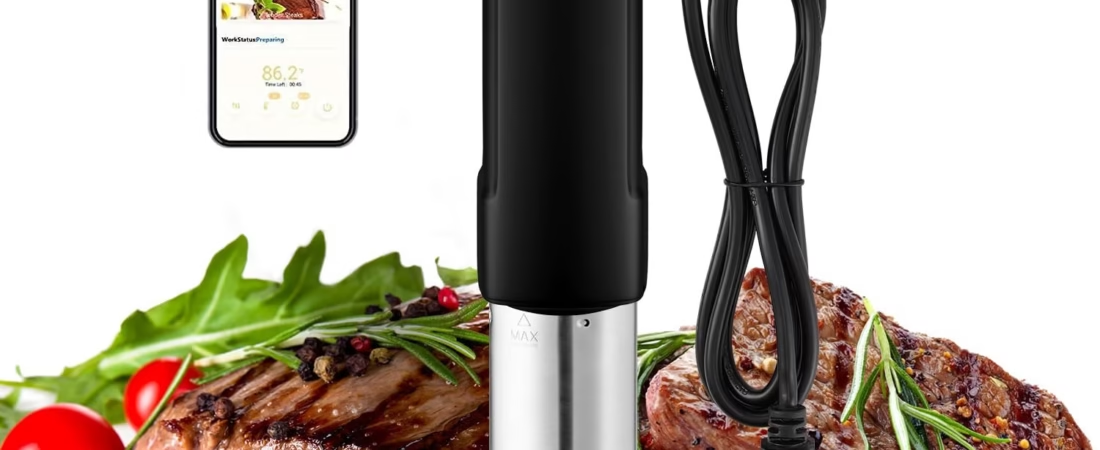
The NKBIRD WIFI Sous Vide Cooker ISV-100W is a 1000-watt immersion circulator designed for this style of cooking. Its feature set includes Wi-Fi connectivity, app-based operation, preset recipes, a smart timer, and a calibration function. These features are intended to give users more control over the cooking process while allowing them to monitor or manage certain functions through a connected device.
A sous vide machine can be useful for a wide range of foods, including meat, poultry, fish, vegetables, eggs, and some desserts. It can also be incorporated into meal-preparation routines where ingredients are prepared ahead of time and cooked according to specific temperature requirements.
However, sous vide cooking has its own learning curve. The machine is only one part of the process. Water circulation, container selection, bagging, food thickness, cooking temperature, time, cooling, storage, and food safety all matter.
This guide explains the NKBIRD ISV-100W’s main features and explores how an immersion circulator can fit into everyday cooking. It also compares sous vide cooking with other common methods and discusses practical considerations that should be understood before using a precision water-bath appliance.
What Is Sous Vide Cooking?
Sous vide is a cooking technique in which food is sealed in a bag and cooked in a temperature-controlled water bath.
The term comes from French and means “under vacuum,” although modern sous vide cooking does not always require a vacuum sealer. Suitable food-safe bags can also be used with appropriate sealing methods.
An immersion circulator is the device responsible for controlling the water bath.
It generally performs three important functions:
- Heating the water
- Circulating the water
- Maintaining the selected temperature
The NKBIRD ISV-100W combines these functions with digital controls and connected features.
Because the water is maintained at a selected temperature, the cooking environment can remain relatively stable throughout the cooking period.
This is particularly useful for recipes where temperature precision is important.
Key Features
1000-Watt Heating System
The NKBIRD ISV-100W is equipped with a 1000-watt heating system.
The wattage describes the electrical power available to the heating element. A higher power rating can help an immersion circulator heat water efficiently, although actual heating time depends on several factors.
Water volume, starting water temperature, container shape, ambient temperature, and circulation all affect how quickly a water bath reaches the selected temperature.
For home cooking, the 1000-watt specification provides a useful indication of the appliance’s heating capacity, but it should not be interpreted as a guarantee of a particular preheating time in every kitchen.
Wi-Fi Connectivity
One of the distinguishing features of this model is Wi-Fi connectivity.
Connected cooking appliances can allow users to interact with the device through a compatible smartphone application.
This can be useful when the cooking process takes place over an extended period and the user wants to monitor or manage the appliance without standing beside it continuously.
Wi-Fi functionality can also make it easier to organize recipes or access preset cooking information through the associated application.
The actual connectivity experience depends on the app, home network, device compatibility, and setup process.
Free App
The product is described as including access to a free app.
An app-connected sous vide cooker can provide another interface for controlling or monitoring the cooking process.
Instead of relying exclusively on physical controls, users can potentially interact with the cooker from a mobile device.
The exact functions available through the app should be confirmed through the manufacturer’s current documentation because app features can change over time.
14 Preset Recipes
The NKBIRD ISV-100W is described as offering 14 free preset recipes.
Preset recipes can be useful for beginners because they provide starting points for cooking different types of food.
Rather than selecting a temperature and duration entirely from scratch, users can refer to preset information and then adapt the settings according to the recipe, food thickness, and desired result.
Preset recipes should still be treated as guidance rather than universal rules.
Smart Timer
A timer helps users manage the duration of the cooking process.
Sous vide cooking can involve longer cooking periods than some conventional methods, so a timer can be particularly useful.
A smart timer can help organize the cooking schedule and reduce the need to manually track elapsed time.
The timer should not be confused with food-safety controls. A timer tells the user how long the appliance has been operating; it does not independently determine whether food has been handled, stored, or cooked safely.
Calibration Function
The calibration function is another notable feature.
Temperature accuracy matters significantly in sous vide cooking because the technique depends on maintaining a controlled water temperature.
Calibration allows the user to account for potential differences between the displayed temperature and the temperature measured by an appropriate reference thermometer.
The exact calibration procedure should be performed according to the manufacturer’s instructions.
A calibrated appliance can provide greater confidence that the displayed temperature corresponds more closely to the actual water-bath temperature.
Immersion Circulator Design
The appliance is an immersion circulator rather than a standalone water-bath container.
This means it is designed to be placed into a separate suitable container filled with water.
The circulator heats and moves the water around the food.
This configuration provides flexibility because users can select a container appropriate for the amount of food being prepared, provided it meets the appliance’s requirements.
How It Can Be Used
Cooking Steak
Steak is one of the most familiar applications of sous vide cooking.
A steak can be sealed in a suitable bag and placed into the temperature-controlled water bath.
The selected temperature determines the approximate cooking state, while thickness influences how long the steak needs to remain in the bath.
After sous vide cooking, many recipes finish the steak with a short searing step in a hot pan or on a grill.
This creates surface browning while the interior has already been brought to the desired temperature through the water bath.
Preparing Chicken
Chicken can also be prepared using sous vide.
The technique allows the cook to select a controlled water temperature and maintain it throughout the cooking period.
Because poultry requires careful food-safety handling, temperature and time should be based on reliable food-safety guidance rather than relying solely on a generic preset.
The thickness of the chicken also matters.
A thick chicken breast does not heat at exactly the same rate as a thin piece.
Cooking Fish
Fish can be delicate and can become overcooked relatively quickly with conventional high-heat methods.
Sous vide provides a controlled cooking environment that can be useful for certain fish preparations.
Fillets should be prepared in appropriate food-safe bags, and the cooking temperature should be selected according to the specific fish and recipe.
Preparing Vegetables
Vegetables can also be cooked in a water bath.
Carrots, potatoes, asparagus, and other suitable vegetables can be prepared using sous vide techniques.
The approach can be useful when the cook wants to control texture and cooking temperature.
Some vegetables require higher temperatures than delicate proteins, so settings should be selected specifically for the ingredient.
Cooking Eggs
Eggs are another common sous vide application.
Because eggs respond strongly to temperature, precise temperature control can be useful for achieving particular textures.
Different preparations can require different temperatures and cooking times.
The user should follow an appropriate recipe rather than assuming that one setting applies to every egg preparation.
Meal Preparation
Sous vide can fit naturally into meal-preparation routines.
Ingredients can be portioned and prepared ahead of time before being cooked in the water bath.
For households that plan meals several days in advance, the ability to control temperature and cooking duration can be useful.
However, cooked food should be cooled, stored, and reheated using appropriate food-safety procedures.
Preparing Tougher Cuts of Meat
Some tougher cuts of meat can benefit from controlled, longer cooking.
Sous vide can maintain a consistent temperature for extended periods, allowing connective tissue to break down gradually in recipes designed for this purpose.
The result depends on the particular cut, temperature, and duration.
Finishing Foods With a Sear
Sous vide cooking often works well as one stage of a larger cooking process.
For example, meat can be cooked in the water bath and then quickly seared in a very hot pan.
The water bath controls the interior temperature, while the searing step develops surface browning and flavor.
This combination illustrates how sous vide can complement rather than completely replace conventional cooking methods.
How to Set Up the NKBIRD Sous Vide Cooker
Choose an Appropriate Container
Because the ISV-100W is an immersion circulator, a suitable water container is required.
The container should be large enough to hold the required amount of water and food without exceeding the appliance’s operating limits.
The container should also provide adequate depth for the circulator.
Add Water
Fill the container according to the manufacturer’s minimum and maximum water-level requirements.
The water level is important because an immersion circulator needs sufficient water to operate properly.
Do not operate the appliance outside the specified water range.
Attach the Circulator
Secure the circulator to the container using the provided mounting system or clamp.
The unit should remain stable during operation.
Select the Temperature
Choose the desired cooking temperature using the appliance’s controls or compatible app.
Temperature selection should be based on a reliable recipe and the characteristics of the food being prepared.
Set the Timer
Set the cooking duration as appropriate.
Remember that time and temperature work together in sous vide cooking.
A cooking guide should consider both rather than treating them as completely independent variables.
Prepare the Food
Place the food into an appropriate food-safe bag.
Remove excess air using the chosen sealing method while ensuring the bag is suitable for the intended cooking temperature.
Submerge the Bag
Place the sealed food into the water bath.
The bag should remain appropriately submerged without interfering with the circulator’s water flow.
Monitor the Process
Once cooking begins, the circulator heats and moves the water.
If Wi-Fi and app functionality are being used, the user can follow the available monitoring or control features.
Finish the Food
Once the cooking process is complete, remove the food carefully.
Many recipes involving meat benefit from a final searing step.
Other foods can be served directly depending on the recipe.
Understanding Temperature and Time
Sous vide cooking is different from simply setting a timer on an oven.
Temperature is central to the technique.
Temperature Controls Doneness
For foods such as steak, the selected water temperature influences the final internal temperature and therefore the cooking result.
A lower temperature can produce a different texture from a higher temperature.
Time Affects Texture and Pasteurization
Cooking duration influences more than convenience.
For some foods, sufficient time at a specific temperature is important for food safety. For others, longer cooking changes texture.
This is why reliable sous vide recipes typically specify both temperature and time.
Thickness Matters
Food thickness is especially important.
A thin steak and a thick steak may reach their target temperature at different rates.
Similarly, a thin chicken breast and a thick chicken breast require different considerations.
Starting Temperature Matters
Food placed into the bath directly from refrigeration behaves differently from food that has been sitting at room temperature.
For food safety, it is generally preferable to minimize unnecessary time in temperature ranges where microorganisms can multiply.
Water Circulation Matters
The circulator’s ability to keep water moving helps maintain a more uniform water temperature around the food.
Without adequate circulation, temperature differences can develop within a large or poorly configured water bath.
Practical Benefits of Sous Vide Cooking
Temperature Control
The defining benefit of sous vide is precise temperature management.
Instead of relying on the air temperature inside an oven or the surface temperature of a pan, the water bath provides a controlled environment around the food.
Repeatable Cooking
Once a suitable recipe has been established, users can repeat the same temperature and time settings.
This can make certain meals easier to reproduce.
Reduced Need for Constant Attention
Unlike pan cooking, where food may need frequent turning or monitoring, sous vide can operate for an extended period after the setup is complete.
The smart timer and connected features can make this workflow even more convenient.
Flexible Meal Planning
Sous vide can be incorporated into planned cooking routines.
Food can be prepared in portions, cooked under controlled conditions, and then finished when needed.
Useful for Different Foods
The technique is not limited to steak.
Meat, poultry, fish, vegetables, eggs, and some desserts can all be prepared using appropriate sous vide methods.
Who It May Be Suitable For
Home Cooks Interested in Precision
People who enjoy controlling cooking temperatures may find an immersion circulator particularly interesting.
The ability to select and maintain a specific water temperature is central to sous vide cooking.
Beginners Learning Sous Vide
The 14 preset recipes and app-oriented design may provide useful starting points for someone learning the technique.
Beginners should still learn the underlying principles rather than relying exclusively on presets.
Meal Preppers
People who prepare meals in batches can incorporate sous vide into their cooking routines.
Portioned ingredients can be prepared ahead of time and cooked according to planned schedules.
Steak and Meat Enthusiasts
People who frequently prepare steaks or other meats may find temperature-controlled cooking useful for experimenting with different textures.
Busy Households
The timer and connected functions can be useful when cooking needs to fit around other activities.
However, users should never leave food unattended in unsafe conditions or rely on a smartphone notification as a substitute for proper food handling.
Experienced Home Cooks
Experienced cooks can use an immersion circulator as another technique within a broader cooking toolkit.
Sous vide can complement grilling, roasting, pan-searing, and other methods.
Important Things to Consider
Food Safety Requires More Than Temperature
Sous vide cooking requires attention to food safety.
Temperature and time must both be appropriate for the specific food.
Certain foods, particularly poultry, seafood, and meat, require careful consideration of pasteurization and storage.
Reliable food-safety references should be consulted when determining cooking parameters.
Vacuum Sealing Is Not Always Required
Despite the name sous vide, vacuum sealing is not necessarily mandatory for every recipe.
Some foods can be prepared in appropriate food-safe zipper-style bags using methods that remove excess air.
The important considerations are bag safety, proper sealing, and keeping the food appropriately submerged.
Choose the Right Container
An immersion circulator requires a container that can safely hold hot water.
The container should be large enough for the food and appliance while remaining within the manufacturer’s recommended operating range.
Maintain the Water Level
Water evaporates during long cooking sessions.
If the water level drops below the appliance’s required minimum, operation can become unsafe or unreliable.
For long cooks, check the water level and use an appropriate setup to reduce excessive evaporation.
Use Appropriate Bags
Not every plastic bag is suitable for prolonged heating.
Use bags specifically intended for food contact and appropriate for the cooking temperatures involved.
Avoid materials that can soften, melt, or otherwise become unsuitable at elevated temperatures.
Consider Countertop Space
Sous vide cooking requires a water container in addition to the circulator.
This can occupy more countertop space than a conventional pan.
Dry the Equipment After Use
After cooking, the circulator should be cleaned and dried according to the manufacturer’s instructions.
Water and food residue should not be allowed to accumulate unnecessarily.
Understand Wi-Fi Requirements
Connected features can be convenient, but they depend on compatible networking and app functionality.
If the network connection is unavailable, users should understand how the physical controls operate and whether the appliance can still perform its basic cooking functions.
App Features Can Change
Mobile applications can receive updates over time.
Some functions may change as software evolves, so the manufacturer’s current app documentation should be checked if a particular feature is important.
NKBIRD Sous Vide Cooker vs. Traditional Stovetop Cooking
Traditional stovetop cooking provides immediate heat and direct interaction.
It is excellent for techniques such as sautéing, boiling, frying, and simmering.
Sous vide is more focused on controlled temperature cooking over longer periods.
Stovetop Advantages
Stovetop cooking is fast for many everyday meals and does not require special bags or a dedicated circulator.
It also allows the cook to observe and adjust the food directly.
Sous Vide Advantages
Sous vide offers greater control over water temperature and can be useful for recipes where consistent internal temperature matters.
It also allows cooking to continue with relatively little active intervention once the setup is complete.
Choosing Between Them
These methods are complementary rather than competing replacements.
Many home cooks can use a stovetop for most meals and bring out a sous vide cooker for specific preparations.
Sous Vide Cooker vs. Slow Cooker
A slow cooker is designed to cook food gradually in a heated vessel.
It is particularly useful for soups, stews, braised meats, and similar meals.
Sous vide is different because the food is generally sealed and surrounded by temperature-controlled water.
A slow cooker emphasizes convenience and one-pot meal preparation.
Sous vide emphasizes precise temperature control and food-specific cooking parameters.
Sous Vide Cooker vs. Oven
An oven surrounds food with heated air.
This makes it suitable for roasting, baking, broiling, and many other techniques.
Sous vide surrounds sealed food with circulating water.
Water transfers heat differently from air, and the temperature can be controlled closely.
The two methods can work together.
For example, meat may be cooked sous vide and then finished under a broiler or in a hot pan to develop surface browning.
Using the Calibration Function
Calibration can be valuable because temperature accuracy is central to sous vide cooking.
Why Calibration Matters
If the displayed temperature differs from the actual water temperature, the cooking process may not behave as expected.
A calibration function allows users to compensate for measurable differences when performed correctly.
Use a Suitable Reference Thermometer
Calibration should be performed using a reliable thermometer and according to the manufacturer’s procedure.
A poor-quality reference thermometer can introduce another source of error.
Calibrate Carefully
The exact procedure should be followed step by step.
Users should avoid making arbitrary adjustments without understanding the relationship between the displayed temperature and measured water temperature.
Tips for Better Sous Vide Results
Preheat the Water When Appropriate
Starting with warm or hot water can reduce the amount of time required for the circulator to reach the target temperature.
However, the starting water temperature should remain within safe handling limits and appropriate operating conditions.
Avoid Overcrowding
Food should be arranged so that water can circulate around the bags.
Overcrowding can interfere with circulation and heating consistency.
Keep Bags Submerged
Air trapped inside a bag can make it float.
Use an appropriate method to keep food safely submerged without obstructing the circulator.
Dry Meat Before Searing
After sous vide cooking, removing surface moisture can help with the finishing sear.
A dry surface generally browns more effectively than a wet one.
Use a Very Hot Pan for Searing
When a recipe calls for finishing meat with a sear, a sufficiently hot cooking surface can help develop browning quickly without significantly changing the interior temperature.
Learn One Food at a Time
Beginners do not need to master every sous vide recipe immediately.
Starting with a few familiar foods can make it easier to understand how temperature and time interact.
Frequently Asked Questions
What is the NKBIRD ISV-100W?
The NKBIRD ISV-100W is a 1000-watt immersion circulator designed for sous vide cooking. It includes features such as Wi-Fi connectivity, app functionality, preset recipes, a smart timer, and a calibration function.
What does 1000 watts mean?
The 1000-watt specification indicates the electrical power rating of the heating system. Actual water-heating speed depends on water volume, starting temperature, container characteristics, and other factors.
What is sous vide cooking?
Sous vide is a cooking method in which food is sealed in a suitable bag and cooked in a controlled-temperature water bath.
Does sous vide require a vacuum sealer?
Not necessarily. Some sous vide recipes can use appropriate food-safe bags with methods for removing excess air. The chosen bag must be suitable for the intended cooking conditions.
What foods can be cooked sous vide?
Common applications include steak, chicken, fish, vegetables, eggs, and certain other foods. Cooking parameters vary significantly between ingredients.
Can the NKBIRD cooker be used for steak?
An immersion circulator can be used for steak by maintaining a selected water temperature for the required duration. Many steak recipes then finish the meat with a high-heat sear.
Can it cook chicken?
Chicken can be prepared using sous vide, but temperature and time must be selected carefully using reliable food-safety guidance.
What does Wi-Fi add to a sous vide cooker?
Wi-Fi connectivity can allow users to interact with compatible functions through a smartphone app. The available features depend on the appliance and its current software.
What is the purpose of the mobile app?
The app is intended to provide a connected interface for operating or monitoring compatible functions and may provide cooking guidance or preset information.
What are the 14 preset recipes?
The product is described as providing 14 preset recipes intended to give users starting points for different sous vide preparations. The exact recipes and settings should be checked in the current product or app documentation.
What is the calibration function?
Calibration allows users to adjust the temperature reading when a measured difference exists between the appliance’s displayed temperature and a suitable reference measurement.
Why is temperature important in sous vide?
Temperature directly influences the cooking result and, for certain foods, is an important part of food-safety control. Reliable recipes should be followed for both temperature and time.
Can I leave the sous vide cooker running for a long time?
Sous vide cooking can involve extended cooking periods, but the appliance should be used only within the manufacturer’s operating limits and with appropriate food-safety practices.
How much water should I use?
The water level must remain within the minimum and maximum levels specified by the manufacturer. Too little water can interfere with safe operation.
Can I use any container?
No. The container should be appropriate for hot water, large enough for the intended food and appliance, and compatible with the circulator’s mounting and operating requirements.
Why does water need to circulate?
Circulation helps distribute heat throughout the water bath and reduces temperature differences around the food.
Why might a sous vide bag float?
Air trapped inside the bag can make it buoyant. Food should remain appropriately submerged, and suitable methods can be used to prevent floating without blocking water circulation.
Can vegetables be cooked sous vide?
Yes. Many vegetables can be prepared sous vide, although they often require different temperatures and cooking durations from meat or fish.
Can eggs be cooked sous vide?
Eggs are commonly prepared using sous vide because temperature control can help achieve specific textures. Appropriate recipes should be followed for the desired preparation.
Is sous vide suitable for meal prep?
It can be. Sous vide can be incorporated into batch cooking and planned meal preparation, provided cooked food is cooled, stored, and reheated safely.
Does sous vide replace a stovetop or oven?
No. Sous vide is a complementary cooking method. Stovetops and ovens remain useful for boiling, sautéing, roasting, baking, searing, and many other techniques.
How should the immersion circulator be cleaned?
Follow the manufacturer’s cleaning instructions. The unit should be cleaned after use, with attention to the components that come into contact with cooking water.
What should I consider before using a Wi-Fi sous vide cooker?
Consider the required container, food-safe bags, water capacity, electrical setup, Wi-Fi requirements, app compatibility, cleaning routine, storage space, and your willingness to learn sous vide temperature and food-safety principles.
Conclusion
The NKBIRD WIFI Sous Vide Cooker ISV-100W is designed to provide controlled water-bath cooking through a 1000-watt immersion circulator combined with connected and convenience-oriented features.
Its Wi-Fi capability, compatible app, 14 preset recipes, smart timer, and calibration function give it a broader feature set than a basic immersion circulator. For beginners, preset cooking information can provide useful starting points, while experienced home cooks can use temperature control and calibration as part of a more precise cooking workflow.
Sous vide itself offers a distinct approach to food preparation. Instead of exposing food directly to a hot pan or oven environment, it cooks sealed food in circulating water maintained at a selected temperature. This can be particularly useful for certain meats, poultry, fish, vegetables, eggs, and meal-preparation applications.
The technique does require some additional equipment and planning. Users need a suitable water container, appropriate food-safe bags, sufficient water, and an understanding of temperature and time. Food safety is especially important because cooking parameters cannot be separated from proper handling, cooling, storage, and preparation practices.
The NKBIRD’s calibration feature can also be useful for users who want to pay closer attention to temperature accuracy. However, calibration should be performed carefully with an appropriate reference thermometer and according to the manufacturer’s instructions.
Compared with stovetop, oven, and slow-cooker methods, sous vide serves a different purpose rather than replacing those cooking techniques. It can become another tool in a broader kitchen setup, particularly when temperature control and repeatability are priorities.
For home cooks interested in exploring precision cooking, meal preparation, or a more controlled approach to certain foods, an immersion circulator can provide a practical way to experiment with sous vide cooking. The key is to understand both the appliance and the cooking method rather than relying solely on preset programs.